Why your hotel area matters more than your airfare
On a first trip from Europe to New York, many travelers start with flight price. In practice, the hotel area often shapes the trip more than the fare itself. Staying in Manhattan, choosing a transit-friendly pocket of Queens, or booking in Downtown Brooklyn can create very different levels of convenience, pace, and fatigue.
This is also a strong SEO topic because the search intent is clearer. Travelers are no longer searching only for flights to New York. They are asking where to stay in New York for a first trip, Manhattan vs Brooklyn, and is Queens a good place to stay. Those are decision-stage queries, not inspiration-stage ones.
Why short New York trips look more relevant in 2026
Expedia's February 2026 Air Hacks report says Friday has emerged as a cheaper travel day and that short micro-cations are becoming more mainstream. That makes three-to-five-night New York trips from Europe an even more relevant planning pattern.
That is why better content should answer more than which neighborhood is popular. It should explain the working balance between jet lag, airport transfer time, subway access, and evening ease. For a first US trip, that operational clarity is what lowers friction.
Manhattan: the easiest option to understand, but the most expensive
For first-time visitors, Manhattan still feels like the lowest-friction choice. Major sights are close, the city reads more easily, and late returns to the hotel are mentally simpler. If the goal is to see a lot in the first few days, that advantage is real.
But Manhattan comes with a heavy hotel premium. Rooms can be smaller, nightly rates rise quickly, and travelers may end up stretching the total budget just to stay central. It works well for high-efficiency city breaks, but it is not always the strongest value option.
Long Island City: one of the strongest value zones for a first New York stay
Long Island City can be one of the smartest alternatives for a first Europe-to-New York trip. It does not feel as central as Manhattan, but when the hotel is near the right subway lines, Midtown access can still be impressively fast. That gives travelers a calmer cost structure without making the city difficult.
The real strength of LIC is the combination of slightly lower room cost plus still-strong transit. First-time travelers should not make the city harder just to save money. Long Island City often holds that balance better than more distant budget choices.
Downtown Brooklyn: for travelers who want city energy without Manhattan pricing
Downtown Brooklyn and nearby areas create a good middle layer for travelers who do not want their New York experience to be limited to Manhattan. The neighborhood texture can feel more local, while subway access still keeps Manhattan within easy reach.
The key caution is that micro-location matters a lot. Not every part of Brooklyn creates the same result. But when travelers stay in the Downtown Brooklyn corridor, they can often get a strong balance of energy, convenience, and spend.
Which area creates less friction from JFK or Newark?
Transfer fatigue should not be underestimated on a first New York trip. After a long flight from Europe, immigration, AirTrain or rail connections, and hotel check-in timing can make the first day messy. Manhattan may feel strongest psychologically, but in some cases a well-positioned hotel in Long Island City or Brooklyn creates a cleaner arrival.
If the trip enters through Newark, Manhattan or Downtown Brooklyn often feels more intuitive. If the flight lands at JFK, Queens connections can sometimes reduce friction thanks to a simpler transit flow. The best answer depends on the airport and the hotel zone together, not on one factor alone.
Which area fits which kind of traveler?
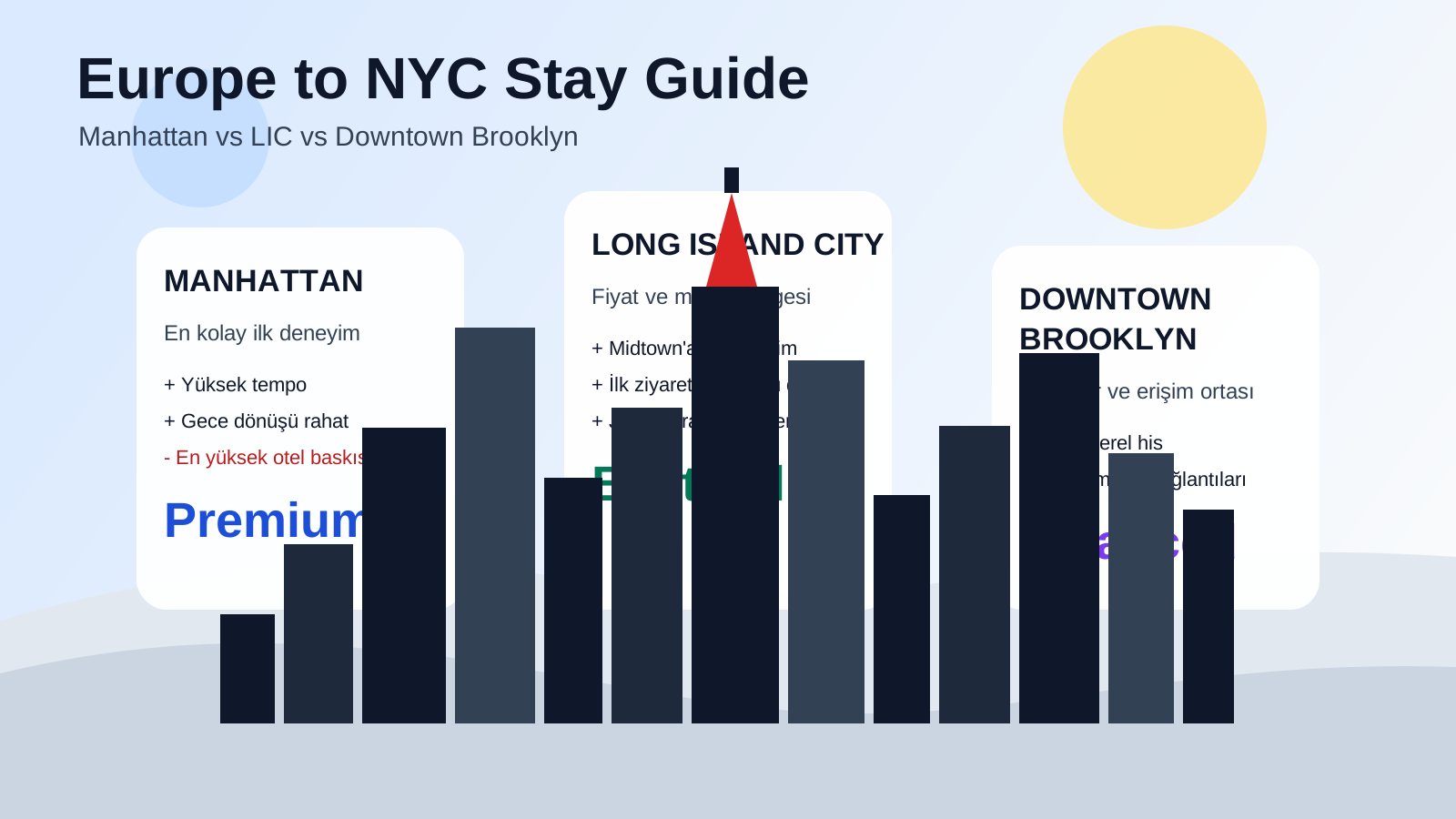
If the goal is the simplest first New York experience with the least confusion, Manhattan remains the premium answer. If the goal is to lower the hotel layer without making the city harder, Long Island City is the strongest balanced pick for many travelers. If the goal is to add more neighborhood character while keeping strong access, Downtown Brooklyn becomes a more textured option.
That means the right decision should not be made from nightly rate alone. On a first US trip, the real question is not which room is cheapest, but which area will let me experience New York more comfortably.
Conclusion
For a first trip from Europe to New York, Manhattan, Long Island City, and Downtown Brooklyn each represent a different travel logic. Manhattan is easiest but pricier, LIC is the strongest value balance, and Downtown Brooklyn offers a compelling middle ground between access and character.
If the goal is to build SEO value while helping real travelers make a decision, a neighborhood-based guide to where to stay in New York is one of the clearest high-intent content angles available.