Why is open-jaw planning such a strong search topic for Europe to West Coast trips?
A large share of travelers flying from Europe to the US West Coast are not looking for a single-city break. They want a route that moves along the coast. Flying into San Francisco and departing from Los Angeles, or doing the reverse, has become a frequent planning question for exactly that reason. The user is not only searching for airfare; they are trying to solve drive flow, stopovers, car rental timing, and airport stress in one decision.
From an SEO perspective, the intent is clean. Queries around Europe to California road trips, San Francisco to Los Angeles itineraries, and open-jaw West Coast flights all point to the same question: how do I finish the trip without backtracking?
Why does San Francisco often create a cleaner starting point?
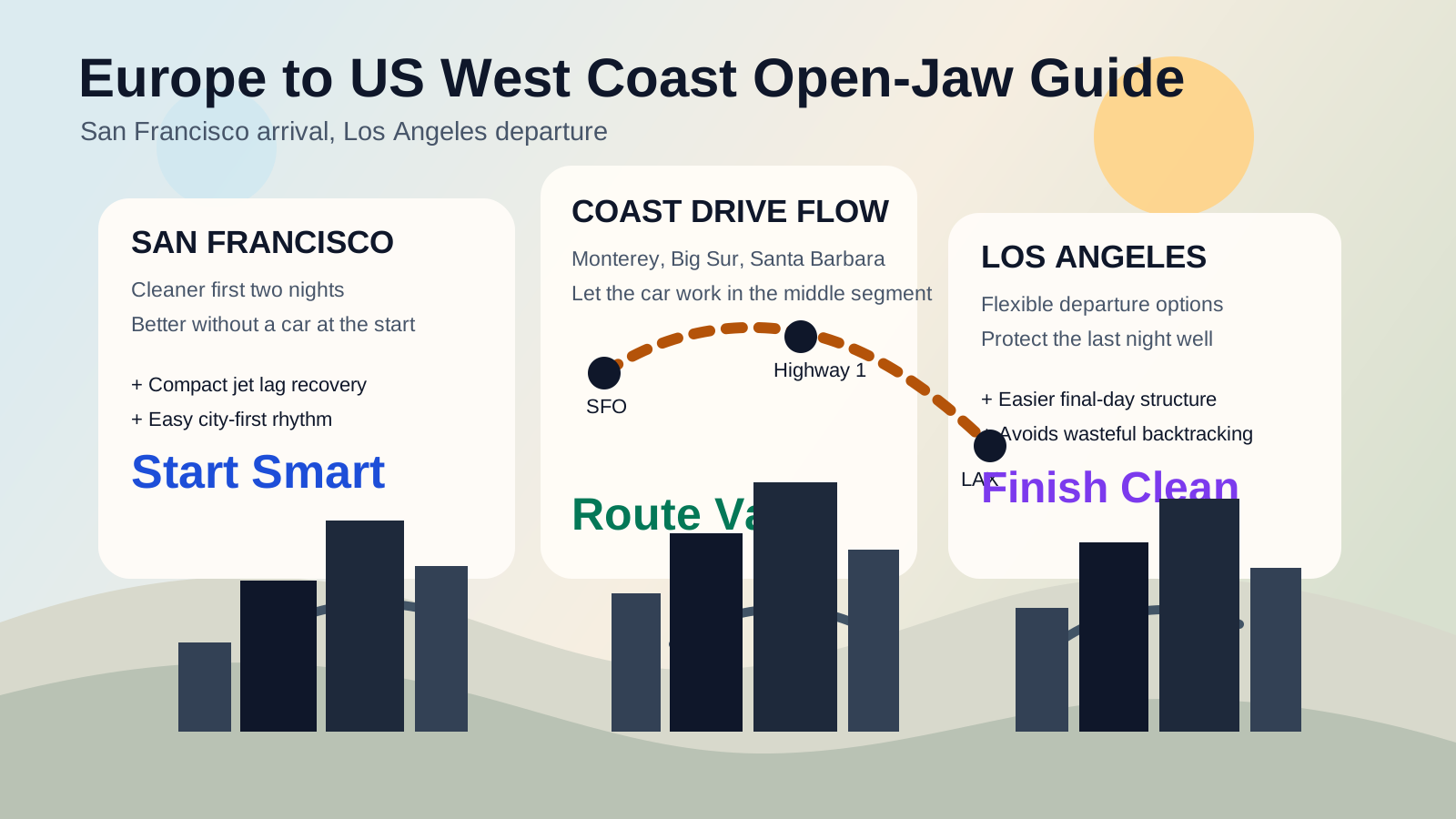
After a long flight from Europe, San Francisco can offer a more compact first-day structure. It works especially well for travelers who want to spend the first two nights without a car. When jet lag is still active, having a tighter relationship between the hotel area and the first sightseeing blocks can make the opening of the trip much easier.
There is also a route-flow advantage. Many travelers naturally prefer moving north to south through San Francisco, Monterey, Big Sur, Santa Barbara, and Los Angeles. Instead of feeling fragmented at the end, the trip often gains momentum as it moves down the coast.
Why can departing from Los Angeles simplify the final day?
Los Angeles often provides broader long-haul departure options, which makes it a practical ending point in an open-jaw setup. It also gives you more flexibility to place the last night in a location that protects the departure morning. That reduces the pressure of an unnecessary return drive late in the trip.
If you force the route back to San Francisco just to match a classic round trip, the trip can pick up extra mileage, another hotel night, or a more compressed last day. A standard return ticket may look cheaper on the first screen, but it does not always stay cheaper once the whole route is counted.
Why should the first two nights and the last night be planned differently?
One of the most common mistakes on a California route is booking every night with the same logic. The first two nights and the final night do different jobs. Early nights are about a low-friction arrival, easy check-in, and a calm start after a long flight. The final night is about protecting the departure morning and avoiding avoidable stress.
That is why a San Francisco hotel area with easier access and less operational friction can be smarter than chasing a flashy bargain. On the Los Angeles side, choosing a cheap but disconnected final-night hotel can undo the balance of the whole trip on the last morning.
At what point should car rental enter the plan?
Not every traveler needs to pick up a car the moment they land in San Francisco. In many cases, delaying the rental until the city portion is done is the stronger move. Parking cost, steep streets, and light urban use can create unnecessary friction during the opening part of the trip.
A cleaner model is to finish the city stay first, then collect the car when the coastal drive begins, and keep it until the Los Angeles departure. That means the car is active where it creates real value. Operationally, this often improves both the budget structure and the rhythm of the trip.
When can returning from the same city still be the better option?
If the trip is built around one primary region rather than a flowing coast route, a standard round trip can still be the cleaner plan. For example, if the focus is San Francisco plus Napa and Yosemite, or a Los Angeles-centered stay with beaches and entertainment, an open-jaw ticket is not automatically better. Open-jaw is a tool, not a rule.
The right comparison has to include more than airfare. Internal movement, final-night lodging, possible drop-off fees, and the cost of backtracking all need to be read together. Without that, the cheaper-looking option can be misleading.
A practical decision model for a West Coast route
Start by deciding whether the route works better north to south or south to north. Then compare two scenarios side by side: arrive in San Francisco and depart from Los Angeles, or the reverse. For each version, put four things on one table: transatlantic airfare, car rental structure, the logic of the first two hotel nights, and final-night airport access.
That comparison often reveals the hidden truth that the first search result misses. One option may look slightly more expensive on airfare but still win once it removes a wasted hotel night or a long return drive. That is the real planning logic: read the whole trip, not just the first number.
Conclusion
For travelers flying from Europe to the US West Coast, an open-jaw plan with a San Francisco arrival and Los Angeles departure is often a strong fit when the route is designed to move down the coast. It can soften the first-day landing, make car use more efficient in the middle of the trip, and create a cleaner final morning.
The best choice still does not come from airfare alone. It appears when route flow, hotel logic, and airport access are evaluated together. If the goal is a smoother experience and a smarter total trip cost, the open-jaw scenario should always be tested next to the classic round trip.