Why host-city choice matters almost as much as match tickets
For Europe-based travelers planning a World Cup 2026 trip to the United States, tickets are only one layer of the decision. Flight access, hotel pressure, stadium logistics, and the overall friction of the first days in the U.S. all matter together. That is why searches such as New York New Jersey vs Atlanta vs Dallas are close to booking intent and carry solid SEO value.
Recent data supports that angle. In KAYAK's May 4, 2026 reporting, World Cup demand is already reshaping search behavior across U.S. host cities: Dallas is among the cities seeing strong flight-interest growth, while New York sits among the most expensive hotel markets in the host-city set. According to FIFA's official schedule announcements, New York New Jersey will host the final on July 19, 2026, Dallas will stage nine matches, and Atlanta will stage eight including a semi-final.
Why New York New Jersey is the most iconic but also one of the costliest options
The World Cup final on July 19, 2026 makes New York New Jersey the most visible U.S. host-city choice for many European travelers. From London, Paris, Frankfurt, Amsterdam, Madrid, or Rome, New York is familiar, easy to explain, and often easier to route than several other U.S. cities. For a first trip to America, that simplicity carries real value.
But simplicity comes at a price. KAYAK's May 4, 2026 city-level report lists New York at roughly 436 dollars in average nightly hotel rates, about 40% higher than comparable 2025 timing. In practice, central stay cost + event demand + final-week pressure can harden the budget quickly. If your priority is direct flight comfort, city experience, and lower navigation stress, New York New Jersey is compelling. If your main goal is cost control, it is harder to justify.
Why Atlanta can feel more balanced for Europe-based fans
Atlanta's biggest strength is transport logic. FIFA's Atlanta host-city guide highlights that the city will host eight matches including a semi-final, and points to Hartsfield-Jackson as one of the world's busiest and best-connected airports. That matters for Europe-based fans because Atlanta is not only a match city, but also a powerful arrival gateway.
Atlanta may not feel as iconic as New York, yet it can be cleaner in total-trip structure. The city is more spread out, so hotel choice should be tied to transit logic and match-day movement rather than postcard appeal. Still, because it does not carry the same cultural premium as New York, it can produce a more manageable flight access + hotel layer when planned well. For a short, one-base tournament trip, Atlanta is a very pragmatic option.
Why Dallas is strong on match density but needs more operational planning
Dallas stands out because FIFA's official schedule gives it the highest match count among U.S. host cities: nine total, including a semi-final. KAYAK also places Dallas among the fastest-rising U.S. host cities for flight interest. Read together, those signals suggest Dallas will be one of the most active demand centers of summer 2026.
The upside is clear. If your goal is to fit multiple matches into one trip, Dallas offers a strong concentration of tournament value. The tradeoff is that it does not work like a compact city break. Stadium geography, hotel zones, and airport logic are more operational. That makes Dallas excellent for a football-first trip, but slightly more complex for travelers who want a classic big-city experience layered on top.
How to read flight and hotel pressure together
The most common planning mistake is to choose the city with the cheapest-looking airfare and stop there. A better fare to New York does not automatically make New York the best total option. And an extra connection into Dallas or Atlanta does not automatically make those cities weaker. The right decision comes from reading airfare, arrival timing, first-night hotel logic, match-day transfer time, and total energy cost across a two-to-four-night stay.
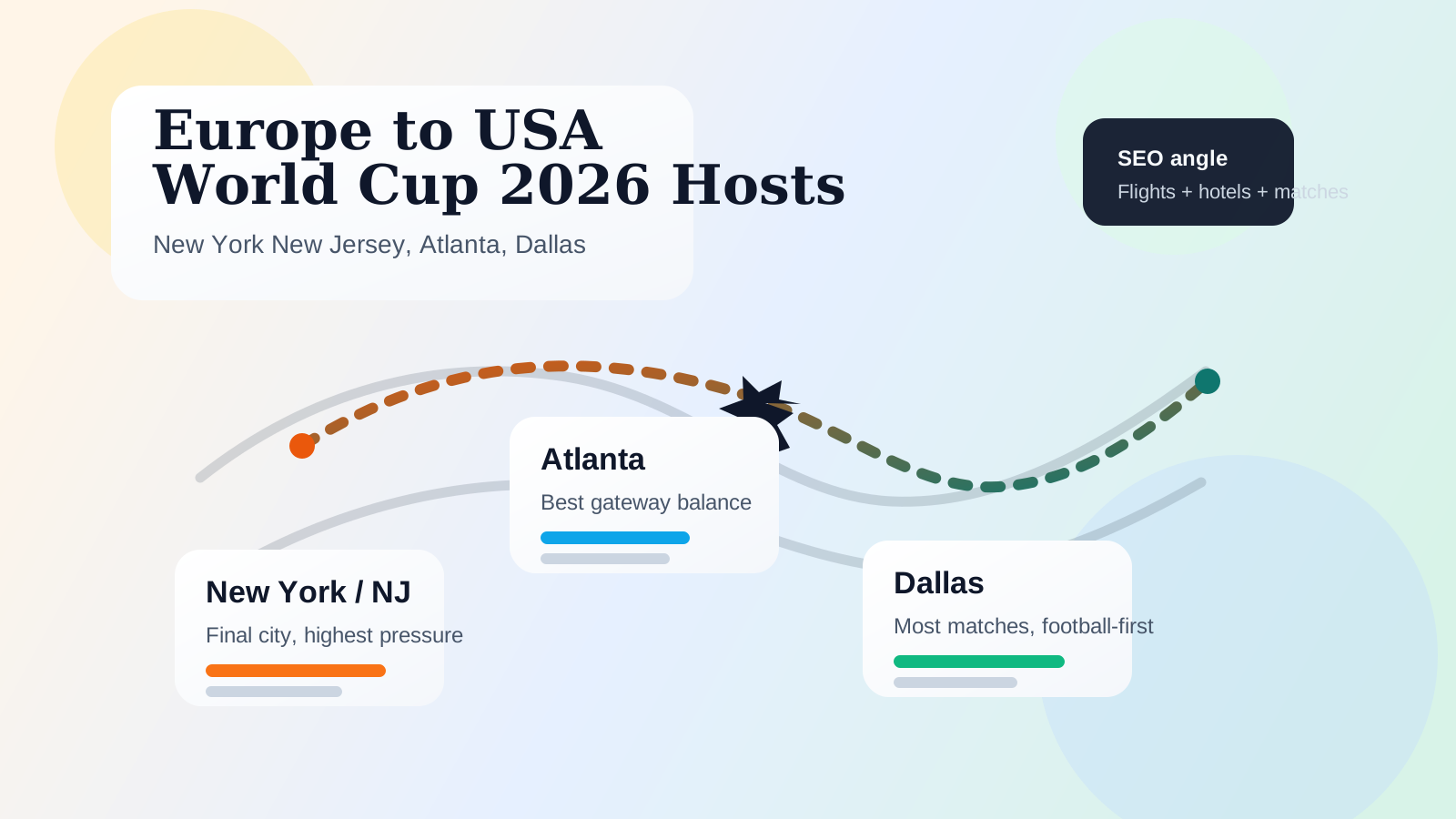
New York New Jersey may be the easiest option to understand, but it is also one of the hardest on accommodation budget. Atlanta may offer the best balance of gateway strength and manageable friction. Dallas may be the strongest choice for match density and football focus. For CheaplyGo readers, the key question is not which city is the cheapest, but which city creates the cleanest total value for the kind of trip you actually want.
Why early planning matters even more for Europe-origin travel
Expedia Group's Q1 2026 Traveler Insights report, published February 17, 2026, shows EMEA travelers planning summer 2026 trips further ahead, with noticeably longer planning windows. That behavior matters in a tournament year. Once Europe-origin travelers begin locking in airfare and flexible hotel inventory, late bookers are not only left with higher prices but also with structurally weaker options.
New York New Jersey around the final, Atlanta around semi-final traffic, and Dallas around dense match clusters may all create different pressure windows. For many travelers, that means choosing the match city first and then designing the flight structure around it is smarter than buying the first attractive transatlantic fare and forcing the rest of the trip to fit.
Which city fits which traveler?
If you want your first U.S. World Cup trip to feel iconic, tourism-friendly, and emotionally tied to the final, New York New Jersey is the strongest answer, but it needs more hotel budget. If your priority is a more balanced gateway, strong air connectivity, and a practical host-city setup, Atlanta is often the cleaner choice. If your trip is centered on catching multiple matches and getting closer to the tournament's densest action, Dallas becomes the more strategic pick.
Conclusion
As of May 7, 2026, there is no single best host city for Europe-to-USA World Cup travel. New York New Jersey leads on visibility and direct-flight familiarity, Atlanta on balance and access, and Dallas on match density.
The strongest decision is the one that manages airfare, hotel cost, and match-day friction together. That is exactly why host-city comparison content is working well right now for both search intent and SEO.