Why Eastern Europe cities are getting more attention for summer 2026
Europe remains one of the strongest long-haul targets for summer 2026 planning. KAYAK's 2026 trend reporting says international airfare from the United States looks softer year over year, and value-seeking travelers are increasingly looking beyond the usual expensive capitals. In the same reporting, cities such as Prague, Krakow, and Sofia show clear momentum, which makes this comparison especially relevant right now.
From an SEO standpoint, this is a strong topic because the search intent is highly actionable. People are not only searching for cheap flights to Europe from the US. They are comparing city logic with queries like Prague or Budapest, is Krakow expensive in summer, or best Europe city break from the US in 2026. Comparison content performs well when the reader is already close to choosing.
Why Prague looks like the easiest first pick
For a US traveler who wants a classic Central Europe trip, Prague is one of the easiest cities to understand quickly. The historic core is compact, the visual payoff is high, and the city works well for a two- to four-night stay. It is easy to walk, easy to absorb, and generally low-friction for a first summer Europe trip.
The downside is exactly that popularity. In peak summer, central hotels can come under heavier pressure and the value profile around the Old Town can weaken fast. That means Prague often wins not as the absolute cheapest option, but as the city that delivers one of the simplest and most rewarding short-trip experiences.
Why Krakow makes sense for a more controlled hotel budget
Krakow has gained attention because it pairs strong atmosphere with a more manageable total-trip structure. The center is compact, accommodation can remain more approachable than in much of Western Europe, and day-to-day spending often feels easier to control. That creates a strong scenario for travelers whose airfare may not be the rock-bottom winner, but who want the hotel side of the trip to stay calmer.
Krakow also feels efficient on a short break. A four-night trip rarely feels too spread out, and hotel choice usually allows more breathing room than many famous Europe city centers. If the goal is high city character with lower hotel pressure, Krakow is often near the top of the shortlist.
Why Budapest still belongs among value-focused classics
Budapest has lived on budget-Europe lists for years, but in summer 2026 its strength is not only that it can look affordable. It also delivers scale, river views, thermal culture, nightlife, and a strong city break feel without automatically demanding premium-capital pricing. That makes it a compelling option for travelers who want their first Europe trip to feel energetic, not only historical.
The important choice in Budapest is the micro-location. A very cheap hotel in a weak location can erase the city's value advantage quickly. In the right area, though, Budapest often feels like a premium experience without a fully premium price tag.
Why Sofia is lower profile but strategically interesting
Sofia is less automatic than the other three cities, which is part of the opportunity. Its appearance in current trend data suggests travelers are exploring less default options in search of better overall value. The city's internal costs and daily spending logic can stay lighter than in many better-known European capitals, which matters when hotel pricing elsewhere gets tighter in summer.
The key tradeoff is usually in the flight layer. Some US-origin itineraries may not connect as cleanly as Prague or Budapest. But if the airfare is acceptable, Sofia can become a smart total-value play thanks to lower city pressure and a calmer summer rhythm.
How should you really compare flights and hotels across these cities?
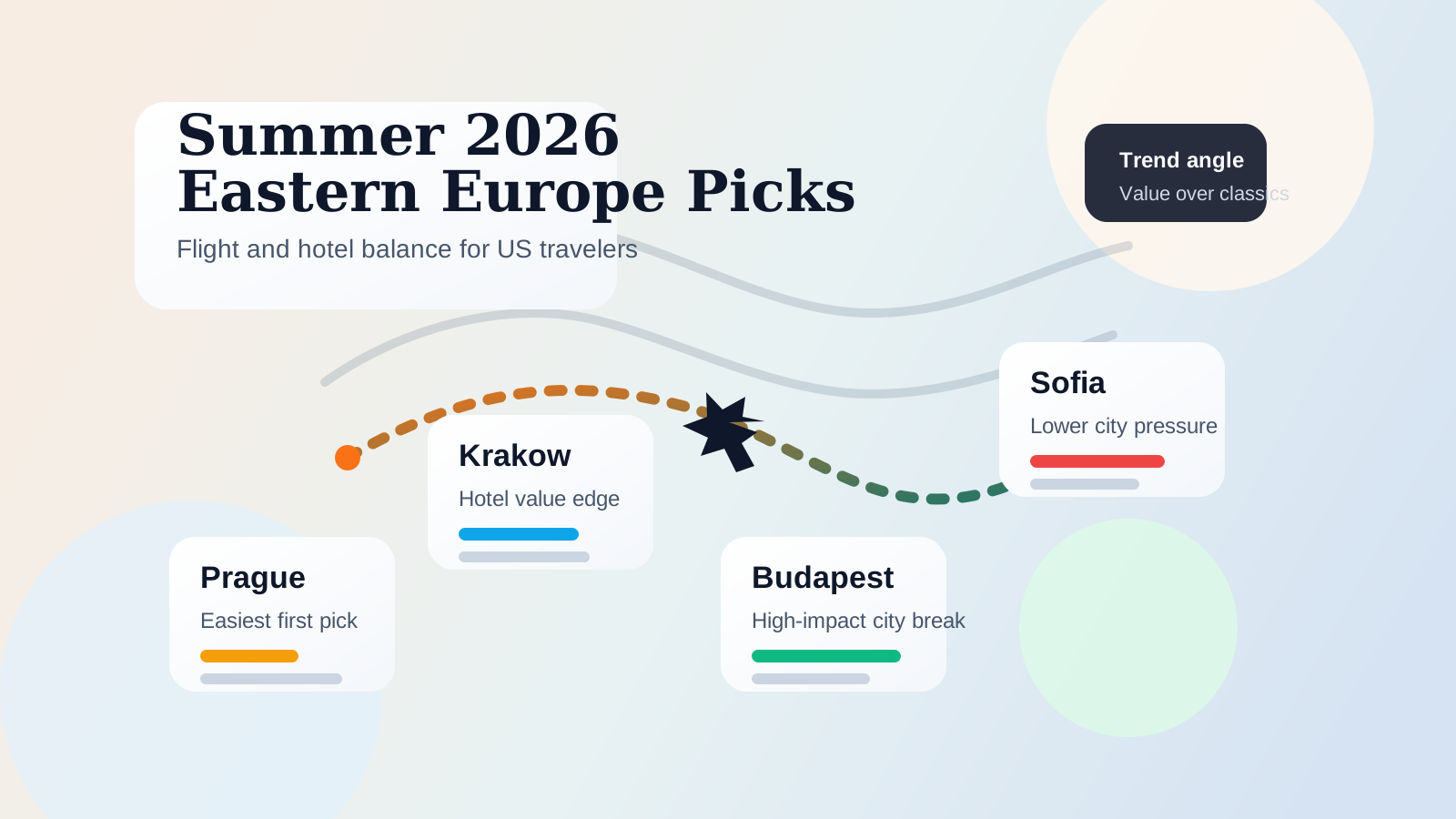
The right answer does not come from airfare alone. A better summer 2026 comparison should combine at least four layers: the flight band from the United States, the nightly rate for a central but sensible hotel, airport-to-city transfer friction, and how much city experience you can extract in two to four nights. Through that lens, Prague often leads on ease, Krakow on hotel balance, Budapest on intensity of experience, and Sofia on lower total pressure.
For a CheaplyGo reader, the real question is not which city is cheapest. It is which city fits my trip style best. Sometimes a slightly higher flight price creates a far better total result because the stay works better and the city consumes less energy.
Which city fits which kind of short summer trip?
If your priority is a first Europe trip with low friction and high postcard impact, Prague is a strong premium-lite answer. If you want to keep hotel costs more controlled while still getting a compact historic city, Krakow is a very strong fit. If you want energy, visual payoff, and a more dynamic urban rhythm, Budapest may be the better choice. If you want something calmer, lower-pressure, and a bit less obvious, Sofia becomes the interesting alternative.
There is no universal winner across these four cities. The best option only becomes clear when flight dates and accommodation logic are evaluated together.
Conclusion
For US travelers planning Europe in summer 2026, Prague, Krakow, Budapest, and Sofia offer smart alternatives to the usual expensive capitals. Prague often wins on ease, Krakow on hotel value, Budapest on high-impact city energy, and Sofia on lowering total trip pressure.
If the goal is to publish something timely, useful, and SEO-friendly without repeating the same crowded city list, comparing Eastern Europe through the combined flight-and-stay lens is exactly the right move now.