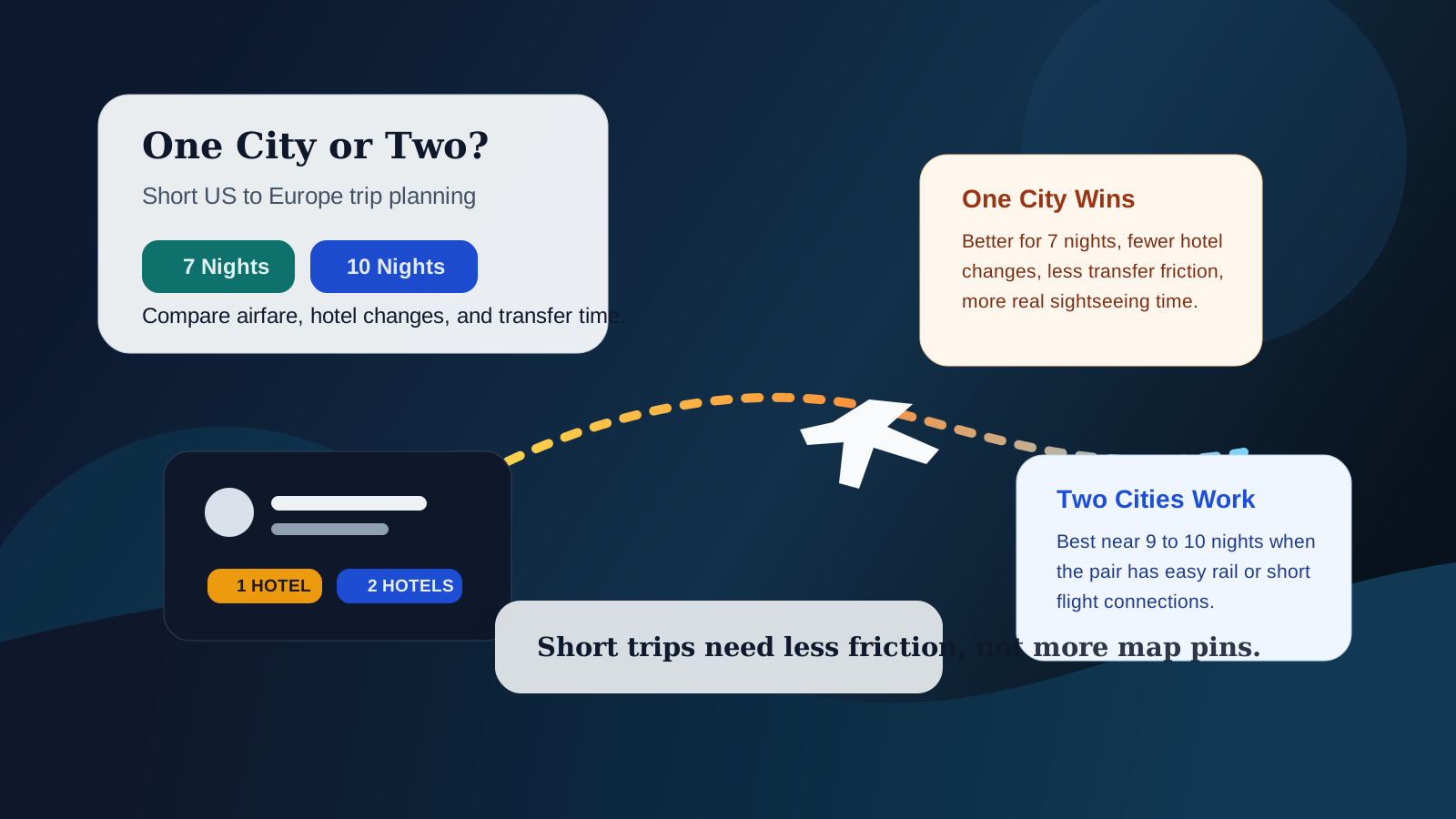
Why the one-city vs two-city question matters so much on a 7-10 day Europe trip
Many US travelers want to fit as much as possible into a transatlantic vacation. Once the long-haul airfare is paid for, adding a second city feels like a better use of the trip. But on a short itinerary, that second stop often adds a train, a short flight, another hotel check-in, and more time spent moving instead of enjoying the destination.
That means the real question is not simply whether two cities sound more exciting. The real question is where your budget, energy, and usable travel time go. This topic also matches strong search intent because travelers often look for answers around 7-day Europe itineraries, Paris and Amsterdam combinations, or whether one city is smarter than a multi-city plan.
When a one-city plan is usually the better option
If your trip is close to seven nights and your arrival and departure days are heavily shaped by long flights, a one-city base often gives the cleanest result. Choosing one main city and taking occasional day trips reduces hotel friction and increases the number of real sightseeing hours.
This model works well in places such as London, Paris, Lisbon, Rome, or Barcelona. You avoid a second luggage day, keep your rhythm stable, and give yourself more room to recover from jet lag. For a first Europe trip, that lower-friction structure is often the stronger choice.
When two cities create real value
Once the trip moves closer to nine or ten nights, two cities can make more sense. But the pairing matters. Combinations with easy connections, such as Paris-Amsterdam, Madrid-Lisbon, or Rome-Florence, are much healthier than fragmented combinations that consume most of a day.
The second city should not exist just to make the itinerary look bigger. It should add a genuinely different experience. If your first stop is museum-heavy and urban, while the second offers a slower pace or a different atmosphere, the route may feel meaningfully richer rather than simply busier.
Why airfare alone is a weak decision metric
Many travelers stop at the lowest round-trip fare. But adding a second city can trigger extra train tickets, taxi transfers, early check-outs, baggage friction, and sometimes the loss of half a day. A flight that looks cheaper on the first screen can easily become the more expensive total trip.
A better method is to compare four numbers together: transatlantic airfare, intercity transfer cost, first-and-last-night hotel logic, and airport transfer cost. In that view, a one-city plan can win even when the airfare itself is slightly higher because the trip produces less overall friction.
Why first-night logic and hotel changes matter so much on short trips
Flights from the US to Europe often land when travelers are already tired. If you add a second city to a short trip, you also add another day shaped by luggage, check-out timing, and adapting to a new hotel. On a compressed itinerary, that extra logistics day can weaken the overall experience more than expected.
That is why limiting hotel changes is not only a budget decision, but also a quality decision. If you do split the trip between two cities, try to keep at least three or four nights in each stay pattern so the route still feels stable.
A simple decision model for choosing one city or two
Start with the total number of nights. Then treat arrival and departure days as partial days. If you have fewer than five strong full days left, one city is usually the better structure. If you have six or more full days and the second city is easy to reach, a two-city route becomes more realistic.
Then ask three practical questions: does the second city require a separate transfer day, does it add a meaningful extra hotel cost, and does it create a clearly different experience? If two of those answers are weak, staying in one city is probably the stronger decision.
Conclusion
For short trips from the US to Europe, the best itinerary is rarely the one that squeezes in the most cities. Around seven nights, one city is often the smarter and calmer structure. Around nine or ten nights, two nearby cities can work well. The right answer comes from reading airfare together with hotel logic and time cost, not in isolation.