Why the first-entry experience matters more than the city name alone
Many travelers planning their first summer trip from the United States to Europe begin by hunting for the lowest transatlantic fare. But the more useful first decision is not airfare alone. It is choosing the city that shapes your arrival experience in the best way. Lisbon, Madrid, and Rome differ meaningfully in first-day fatigue, airport access, hotel pressure, and how easily the trip starts flowing.
That also makes this a strong SEO topic. People search for first Europe trip from the USA, best city to start a Europe trip, Lisbon vs Madrid vs Rome, and where to stay for the first night in Europe. The strongest content answers the flight and hotel question together.
Why Lisbon can be a stronger first Europe stop than many travelers expect
For US-based travelers, Lisbon often creates a softer first-Europe landing. The city feels more compact, the early sightseeing window is easier to manage, and it is possible to build a rewarding first two days without overloading the schedule. That matters for travelers dealing with jet lag who still want to use the trip well on foot.
On the hotel side, Lisbon does not always carry the same pressure as Rome. Prices can still rise sharply in popular central zones, but there are often more balanced options that combine decent airport access with a satisfying city feel. That lower-friction arrival is one of Lisbon's biggest advantages.
Which traveler gets the cleanest value and logistics in Madrid?
Madrid is especially strong for travelers who want a big-capital feel without excessive operational stress. Its hotel stock is broad, the core neighborhoods are easier to read, and the city's structure often feels more manageable on a first trip. For travelers building a two- or three-city route, Madrid can also work well as a stable opening hub.
Another benefit is that a first evening in Madrid can stay simple. Arrive, settle in, take a light walk, and start the full pace the next day. That makes Madrid more than just a fare option. It can be the most balanced first city on the whole itinerary.
Why Rome is more iconic but also more sensitive as a first stop
Rome is emotionally powerful for a first Europe trip. For many travelers, it delivers the strongest sense of history, architecture, and first-day impact. But that is exactly why it requires more careful planning. Heavier visitor pressure, stronger central hotel prices, and the temptation to do too much immediately can make the opening days more tiring.
This does not make Rome a weak choice. It means Rome rewards a more deliberate structure. If your goal is a highly memorable first city with dense sightseeing and symbolism, Rome is hard to beat. But if you want a softer entry, a cleaner first night, and a steadier budget profile, Lisbon or Madrid may work better on some dates.
Where does the first-night hotel matter most?
The first night matters in all three cities, but for different reasons. In Lisbon, a steep or awkwardly connected area can make the arrival evening harder than it needs to be. In Madrid, drifting too far from the practical center can weaken the city's main advantage. In Rome, the wrong hotel zone can raise your cost quickly and drain energy on day one.
That is why the first hotel should not be chosen by star count or discount label alone. Airport access, ease of arrival with luggage, and walkable surroundings for the first day should all be read together. A cheap room with too much friction can distort the whole trip.
Which city creates the easiest pace for jet lag?
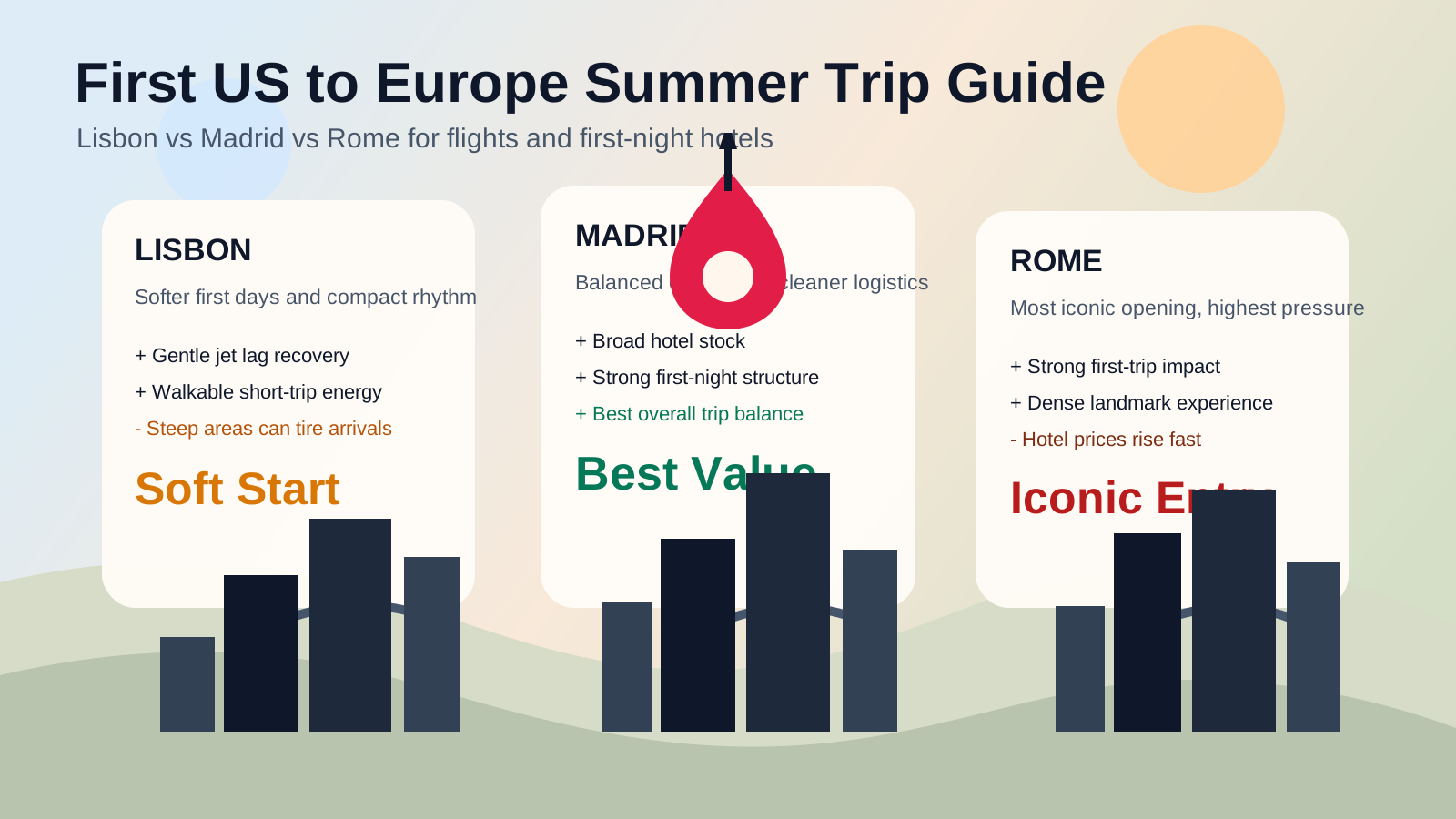
For travelers who want a lighter and simpler first two days, Lisbon often feels the gentlest. For those who want a bigger-city rhythm with a more orderly structure, Madrid stands out. Rome offers the highest emotional payoff, but it also asks for the most careful energy management.
There is no universal answer. The real question is what you want from your first Europe trip: a softer entry, a balanced capital city, or a more iconic but more intense opening. The best city changes based on that intention.
A practical decision model for a first summer route to Europe
Start by defining the total trip length. If the whole journey is only four or five nights, a lower-friction first city matters even more. Then compare airfare together with the first two hotel nights, airport transfer ease, and city rhythm. If you plan to continue to a second city, evaluate how cleanly that onward segment works too.
When travelers use this model, the cheapest flight sometimes drops out because it makes the first hotel night or the second segment unnecessarily difficult. The strongest choice is often not the lowest sticker price. It is the one that simplifies the total flow of the trip.
Conclusion
For a first summer trip from the US to Europe, Lisbon, Madrid, and Rome offer very different opening experiences. Lisbon can feel softer and more compact, Madrid more balanced and orderly, and Rome more iconic but also more demanding.
If your goal is to protect the budget while building a cleaner first Europe experience, the key is to read airfare and hotels as one decision instead of separate screens. That is where the right starting city becomes clear.