Why smaller European city breaks are gaining more attention in summer 2026
Travel intent is shifting in 2026. In KAYAK's 2026 trends reporting, younger and mid-career US travelers are leaning toward shorter but more frequent trips, and many are showing more interest in smaller cities and second-tier destinations instead of only the biggest capitals. That matters for transatlantic travelers who want to reduce in-city friction and keep hotels under better control.
That is why searches like Porto vs Valencia vs Bologna carry strong SEO value. The traveler is no longer looking only for a cheap Europe flight. They are trying to understand where the cleaner total value sits. For short itineraries, comparison-driven content matches decision-stage search intent very well.
Who should choose Porto for a summer 2026 Europe trip?
Porto works especially well for short Europe getaways because it feels compact, scenic, and easy to process. For a US traveler visiting Portugal for the first time, it can deliver a strong experience without feeling as stretched or intense as Lisbon. Its walkable core also helps a two- to four-night itinerary stay efficient.
The tradeoff is hotel pressure in peak summer. Areas around Ribeira and the historic center can get expensive quickly, so Porto is not always the cheapest option. But for travelers looking for high atmosphere with low in-city friction, it remains a very attractive pick, especially for couples or first-time Europe visitors who want a softer pace.
Why Valencia can look cleaner on the flight and hotel equation
Valencia stands out because it can deliver a Spain trip without the same level of pressure found in Barcelona. The city combines beach time, old-town character, modern architecture, and a more relaxed rhythm in one destination. That makes it appealing for travelers who want a broader mix instead of a museum-heavy or beach-only break.
On the hotel side, Valencia often feels less compressed than Madrid or Barcelona. For US travelers heading to Europe in summer, that matters. If the goal is beach plus city plus a more manageable hotel layer, Valencia often ends up being one of the most balanced choices on the board.
Why Bologna is more niche but strategically strong
Bologna may not look as postcard-driven as Porto or Valencia at first glance, but it is extremely functional for a short Europe trip. The historic center is compact, the food scene is a real anchor, and Italy's rail network gives the city extra flexibility for one-city or two-city planning. That makes Bologna a smart option for travelers who want Italy without jumping straight into the pressure of Rome or Milan.
The main compromise is usually flight structure. Not every US departure point produces equally clean routing, and well-located hotels in the center can tighten quickly. Even so, Bologna remains an excellent answer for travelers who care about food-led city travel with strong rail flexibility.
How should you compare flight and hotel value across these three cities?
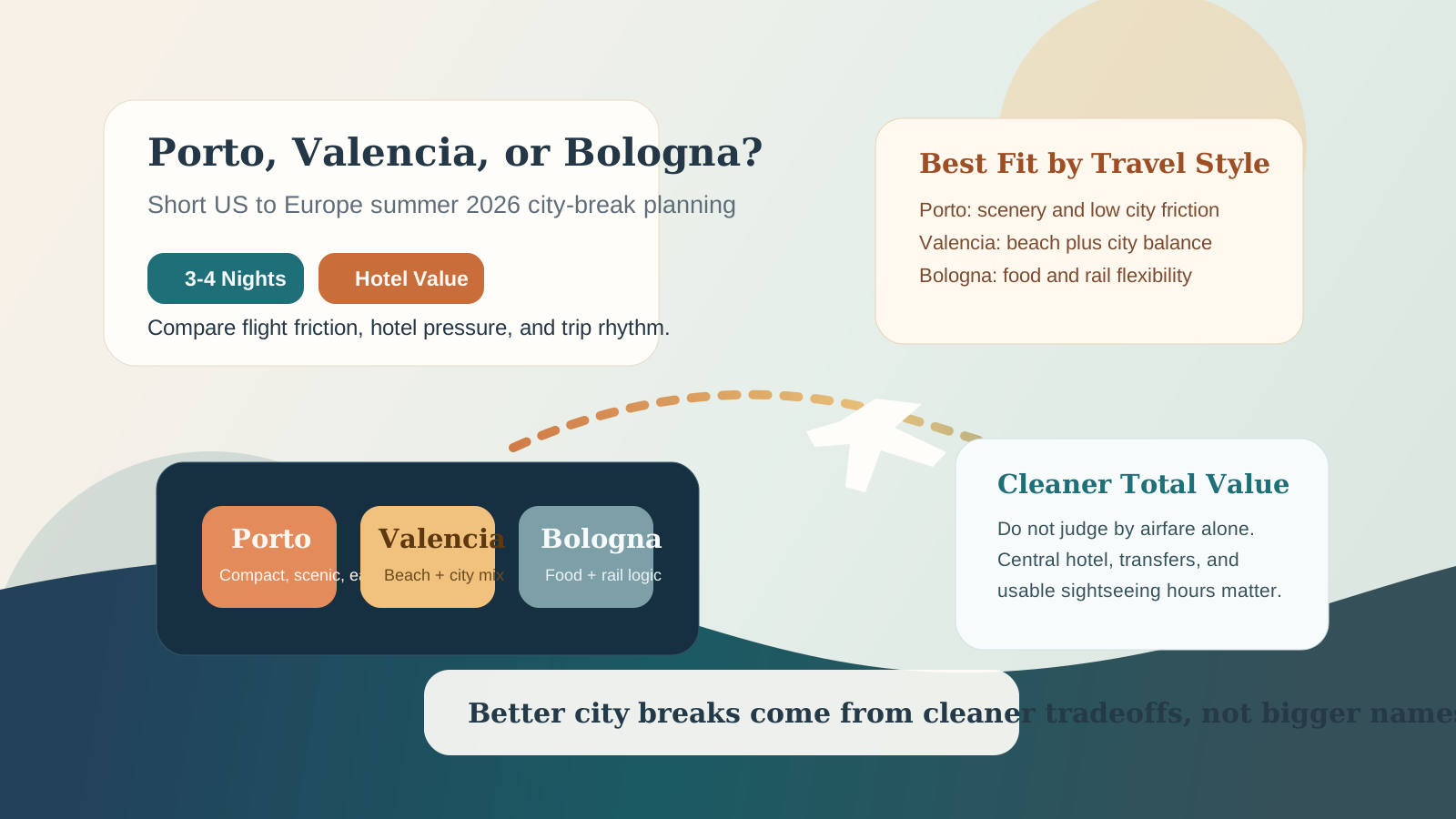
There is no universal winner. Porto is strongest when compact flow and low friction matter most. Valencia becomes very compelling when you want a beach-city mix and a calmer hotel environment. Bologna rises when food, Italy access, and onward train flexibility matter more than postcard optics.
The right comparison should include more than airfare. Central hotel cost, airport-to-city transfer friction, and how much real experience a two- to four-night trip produces all matter. For CheaplyGo readers, the critical question is not which city is the cheapest but which city creates the cleanest total value for a short trip.
Which city fits which traveler best?
Porto fits travelers who want a scenic, romantic, slower-feeling first Europe escape. Valencia fits travelers who want coast, city, and more room in the hotel budget. Bologna fits travelers who put food first, want to keep rail options open, and prefer something that feels more local than headline-tourism driven.
All three can outperform the classic crowded capitals for the right traveler. The best choice appears when your flight dates and hotel threshold are evaluated together.
Conclusion
For a short US-to-Europe trip in summer 2026, Porto, Valencia, and Bologna offer smart alternatives outside the standard big-capital script. Porto leads on atmosphere and simplicity, Valencia on hotel balance and variety of pace, and Bologna on food value and route flexibility.
From a search-intent perspective, this topic is strong because the user is close to a booking decision. Comparing cleaner-value European city breaks instead of repeating the same crowded capitals creates real value for both readers and SEO.