Why travelers are searching for Europe's new border system in 2026
People flying from the United States to Europe this year are not only looking for cheap airfare. They also want to understand what happens at the border, because the European Union has moved to a more digital entry process through the Entry/Exit System, or EES.
From an SEO perspective, this topic is strong because the search intent is direct and practical. People ask what changed for US passport holders, whether first entry will take longer, and when ETIAS becomes mandatory. A useful article should answer those connected questions in one place.
What is EES and when did it become fully active?
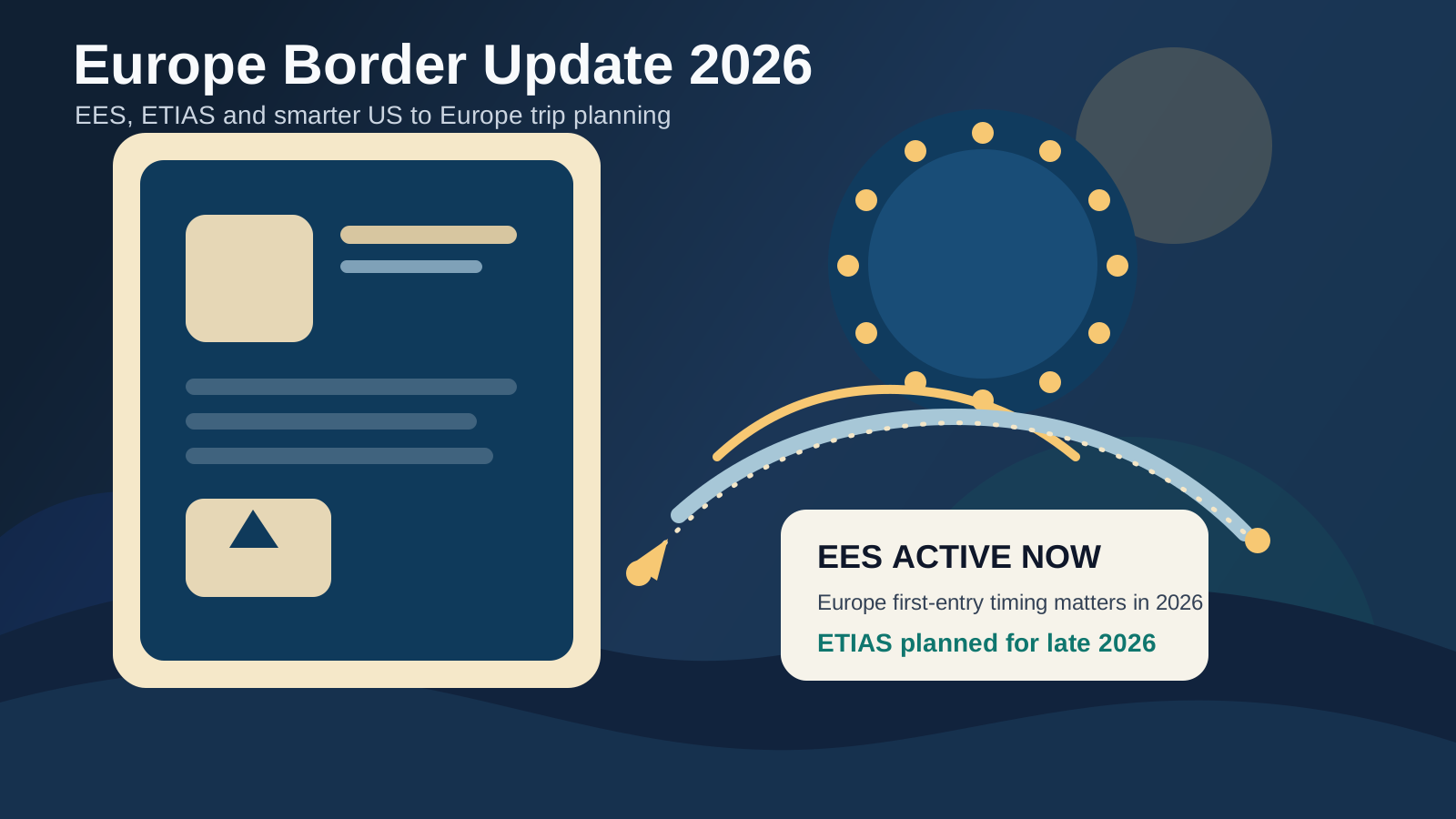
According to European Union sources, the Entry/Exit System electronically records entries and exits of non-EU travelers making short stays in 29 European countries in the Schengen area. The system became fully operational on April 10, 2026.
For a short-stay visitor arriving from the United States, that means the first entry process now runs through a more digital border workflow. It is sensible to leave a little more buffer on arrival, especially if the traveler is entering the system for the first time.
What changes for US travelers on first entry?
The first major change is that passport stamps are no longer the main signal in the travel record. Since entries and exits are tracked electronically, the 90-days-in-180 rule becomes easier to follow and easier for border systems to verify. Border officers may still ask questions, but the process is more structured.
The second point is operational, not legal. The first interaction can feel slower than before, so very tight onward connections, same-day rail commitments, or rigid check-in schedules carry more risk than they used to. Travelers should treat their first Schengen arrival as a real timing variable when planning the trip.
How should you plan airport timing and connections?
The new system does not automatically mean long lines at every airport, but it does justify a more conservative buffer at busy entry hubs. Airports such as Paris Charles de Gaulle, Amsterdam Schiphol, Frankfurt, Madrid, and Rome can see clustered long-haul arrivals from North America at similar times.
That makes it wiser to choose a protected connection window instead of booking against the absolute minimum connection time. If the trip continues by train or a separate low-cost flight, the first day should stay flexible rather than overbooked.
Has ETIAS started in 2026, and when will travelers need it?
The official ETIAS website says ETIAS is not yet in operation and is planned to start in the last quarter of 2026. So as of April 12, 2026, most short-stay US travelers do not need to submit an ETIAS application yet. What they should do is monitor the official launch date rather than rely on third-party urgency.
This distinction matters because travelers often confuse EES and ETIAS. EES is the border entry-and-exit recording system already in effect. ETIAS is the future travel authorization layer for visa-exempt visitors. For travelers leaving now, the main preparation items remain passport validity, trip timing, and first-entry planning.
Why does this matter for cheap flight and hotel decisions?
Trip value is not decided on the airfare page alone. A cheap ticket that requires an aggressive onward connection after the first Schengen entry may not be the best deal once queue risk and transfer friction are included. The same goes for remote airports that look cheaper but create a weaker first-day experience.
The better decision model combines flight price, first-entry airport, connection time, city transfer friction, and first-night hotel setup. That is the real answer most travelers are looking for: not the cheapest number in isolation, but the most reliable total plan.
A short 2026 checklist for US-to-Europe travel
Confirm passport validity well in advance. Choose a first Schengen arrival that does not depend on a razor-thin connection. Keep day-one plans flexible. Do not rush into ETIAS application searches before the official launch date is announced. When comparing flights, treat border processing at first entry as part of the total-trip decision.
Conclusion
The biggest change for Europe trips in 2026 is that the border experience is becoming more digital and more traceable. EES is active now, while ETIAS is planned for the last quarter of 2026. The strongest itinerary is the one that accounts for those realities before booking flights and accommodation.